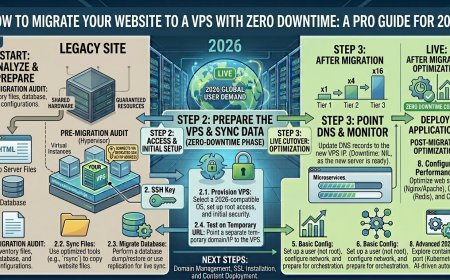
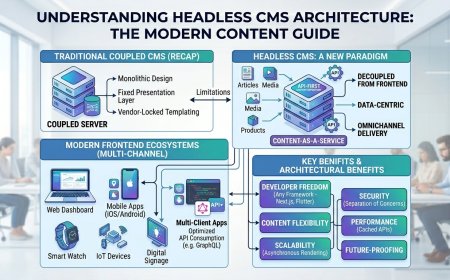
Executive Summary: The Critical Role of Hosting in Content Delivery
In the modern digital economy, web hosting has transcended its role as a mere storage utility to become the foundational engine behind global platform delivery. The performance of your underlying server infrastructure dictates how efficiently a web application can process secure transactions, handle sudden traffic surges, and maintain continuous, unbroken connections across a global user base.
Selecting a progressive hosting framework directly impacts your platform's initial server response times, indexing velocity, and competitive position on search engine results pages. Understanding how server memory allocations, data center geography, and processing pipelines interact allows platform architects to deliver lightning-fast page builds that retain organic traffic. For those building modern applications, it is essential to align your infrastructure with the right development ecosystem. You can explore the industry standards in our guide on the
Infrastructure Standards: The Backbone of Speed and Stability
When configuring a high-traffic hosting environment optimized for ad revenue and visibility, several critical hardware standards and software layers must be implemented:
| Feature | Optimization Standard | Benefit |
| Primary Storage | Enterprise NVMe SSD Arrays | Drastically minimizes read/write latency |
| Static Content | Global Edge Caching & Reverse Proxies | Delivers assets via geographically close centers |
| Dynamic Execution | PHP-FPM fine-tuning & Opcache | Prevents CPU bottlenecks under heavy traffic |
| Transport Layer | HTTP/3 & QUIC Protocol Enabled | Accelerates handshakes for mobile networks |
Core Architecture Models for Digital Growth
Depending on your data complexity and delivery requirements, modern web architectures generally implement one of these powerful deployment systems:
-
[ A ] Clustered Cloud Infrastructure: Distributed systems replicate data across multiple synchronized physical nodes. This prevents any single hardware failure from taking your platform offline.
-
[ B ] Isolated Virtual Private Servers (VPS): Managed VPS hosting uses kernel-level virtualization to dedicate specific CPU cores and RAM allotments exclusively to your environment, eliminating "noisy neighbor" resource conflicts.
-
[ C ] Containerized Deployments and Docker Topologies: Decoupling application services (web server, database, API) into isolated containers allows specific bottlenecks to scale independently across a server cluster.
-
[ D ] Edge Serverless Instances: Serverless functions execute application logic within a globally distributed network of data centers, providing near-instant page response times from any global location.
Monetization Strategy: Aligning Infrastructure for Ad Performance
A well-optimized hosting environment directly impacts how efficiently premium ad networks operate:
-
Slashing Time-to-First-Byte (TTFB): Minimizing initial server response times ensures your layout structure renders instantly, allowing ad scripts to initialize and load without delay.
-
Preventing Content Shifts During Script Hydration: Allocating strict server-side aspect ratios prevents content blocks from shifting as third-party ad networks deliver media assets, safeguarding against layout instability (CLS).
-
Unmetered Bandwidth Concurrency: Maintaining premium network pipelines ensures that a massive influx of simultaneous users does not exhaust data transfer limits, keeping your monetization channels operational during viral traffic spikes.
Performance Metrics: Technical Indicators of Hosting Excellence
True web performance lives at the intersection of clean application code and precise hosting execution:
-
TTFB (Time to First Byte): Measures the exact latency of initial server response; lower TTFB scores form the foundation of premium organic rankings.
-
SSR (Server-Side Render) Efficiency: Tracking milliseconds for a host server to compile dynamic application templates ensures web spiders encounter fully parsed content.
-
Query/Process Execution Times: Monitoring system logs for slow database connections or execution timeouts helps upgrade resources proactively.
Conclusion: Securing Long-Term Asset Value
Deploying an aesthetic frontend holds no financial value if your underlying hosting architecture causes slow response times, driving search engines and human visitors away before a page even loads. Shared, low-grade hosting creates artificial speed bottlenecks that destroy organic rankings.
A highly lucrative digital property relies on modern, premium hosting networks that effortlessly handle scalable ad configurations. Securing an optimized, stable, and highly responsive host server from day one reduces server bills over time, guarantees a fluid reading experience, and creates a stable foundation for long-term growth. To ensure your hosting strategy is fully supported by the best industry practices, refer to our analysis of the