How to Handle Micro-Frontend Failures: Resilient Module Federation
What happens when a micro-frontend remote crashes? Learn how to implement advanced error boundaries, network fallbacks, and circuit breakers in Module Federation.
 John Toledo
How to Handle Micro-Frontend Failures: Resilient Module Federation
Shifting to a micro-frontend architecture using Module Federation gives software engineering teams unparalleled deployment velocity and autonomy. However, runtime code sharing introduces a fresh tier of infrastructure vulnerabilities. In a traditional monolithic application, compile-time checks guarantee that if the build passes, the internal JavaScript dependencies exist. In a federated application, your user's browser fetches critical chunks over live networks.
If an independent deployment pipeline corrupts a remote entry manifest, or if a global content delivery network node experiences a packet routing drop, your host application can experience a severe runtime crash. A breakdown in an isolated, third-party component like a product review widget should never freeze the core checkout funnel of a web application.
Building a production-ready federated application requires designing for architectural failure. To maintain high platform availability metrics, software engineers must wrap their dynamic imports in comprehensive containment, isolation, and recovery layers.
The Core Problem: Cascading Runtime Collapses
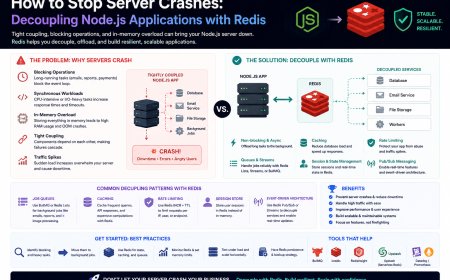
By default, JavaScript executions inside a web browser operate within a single, unified thread context. When a host application attempts to invoke a federated component that fails to download or throws an uncaught error during initialization, the exception bubbles up the call stack.
The Blast Radius Vulnerability: Without explicitly engineered isolation structures, a single broken runtime module acts exactly like a memory leak or an infinite loop, crashing the entire global thread. This kills the container shell application and forces the user to see a blank screen.
Furthermore, traditional try-catch blocks fail to intercept asynchronous network delivery drops. If the remote server hosting a sub-module goes offline, the browser's module loader throws a low-level network resolution error that completely bypasses standard local component validation hooks.
The Architecture: The Resilient Ingestion Pattern
Preventing cascading micro-frontend failures requires implementing an architecture based on strict isolation boundaries. The host application must treat every single remote module as an untrusted external third-party integration.
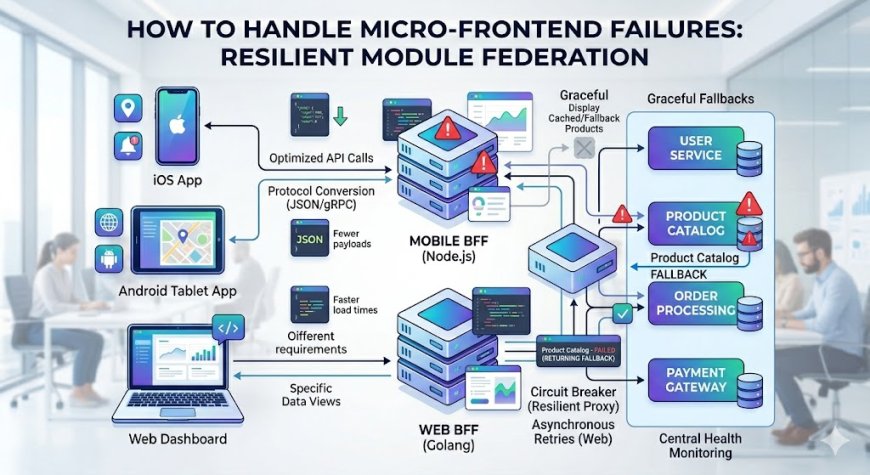
A resilient Module Federation layer mitigates runtime delivery drops through three defensive structural patterns:
-
Dynamic Script Interceptors: Custom loader scripts that intercept the initialization phase of external manifests, validating network availability and checking resource health metrics before passing execution flow to the primary browser thread.
-
Declarative UI Fallbacks: Structural containment wrappers that catch component rendering explosions locally, instantly mounting a lightweight, static interface state to preserve overall platform interactivity.
-
Self-Healing Circuit Breakers: Memory-resident tracking logic that monitors remote failure frequencies over time, completely cutting off requests to an unstable server node if it consistently triggers connectivity timeouts.
Quick Contrast: Unprotected Federation vs. Resilient Architecture
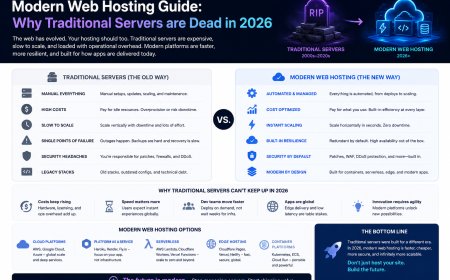
| Stability Metric | Unprotected Module Federation | Resilient Federated Architecture |
| Missing Remote Manifest Impact | Global platform crash (Blank screen event) | Sectional degradation (Core app remains functional) |
| Network Loss Behavior | Indefinite execution block / Uncaught promises | Automatic fallback rendering under 2 seconds |
| Error Containment Surface | Full thread exposure (Cascading failures) | Micro-app isolation (Isolated blast radius) |
| Telemetry & Monitoring | Silent failures or unhandled browser console logs | Instant error reporting to centralized logging systems |
| User Experience Preservation | Broken user session requiring a manual reload | Graceful UI downgrade with operational alternative routes |
How to Build a Fault-Tolerant Module Federation Layer
Migrating a standard federated application into a highly resilient web architecture requires implementing a methodical sequence of network wrappers and execution guardrails.
A Critical Engineering Rule: Resilience layers must be audited continuously via automated testing routines. Implement routine chaos engineering tests inside your staging environments by explicitly blocking specific remote asset servers during simulated user journeys. Validating that your platform degrades gracefully under deliberate network stress is the only way to guarantee absolute stability across production environments.