Modern Web Hosting Guide: Why Traditional Servers are Dead in 2026
Struggling with slow loading times and high server costs? Discover the ultimate web hosting guide for 2026. Learn why Edge and Serverless infrastructure are replacing traditional VPS.
 John
John
Modern Web Hosting Guide: Why Traditional Servers are Dead in 2026
For decades, deploying a website followed a predictable formula: you rented a specific slice of a virtual private server (VPS) from a hosting provider, manually configured an Apache or Nginx web server, uploaded your files via FTP, and pointed your domain's DNS to a single IP address.
If your website experienced a sudden viral traffic spike, your server's CPU would max out, your database would lock up, and your users would be greeted by a frustrating "502 Bad Gateway" error page.
In 2026, managing a monolithic server for standard web applications is no longer just outdated—it is an architectural liability. The hosting paradigm has completely shifted toward global, decentralized, and serverless Edge Infrastructure. This modern tech guide breaks down the core concepts of next-generation web hosting so you can achieve zero-maintenance scaling and blazing-fast loading speeds.
The Core Problem: The Geographical Latency Bottleneck
Traditional web hosting is inherently centralized. If your physical server is located in an AWS data center in Virginia, USA, a user accessing your website from Tokyo, Japan, or Lima, Peru, has to wait for their network packets to travel across underwater fiber-optic cables, over multiple routing hops, and back again.
The Speed-to-Revenue Core Relation: Core web metrics confirm that every 100-millisecond delay in website load time can directly reduce overall e-commerce conversion rates by up to 7%.
Centralized servers introduce high latency, require complex manual scaling configurations, and introduce single-point-of-failure risks. If that specific data center goes offline, your entire digital presence vanishes.
The Breakdown: Moving from VPS to Edge Networks
To build a future-proof web platform, developers and businesses are transitioning from standard servers to globally distributed edge networks. Here is how modern infrastructure works.
1. Traditional VPS Hosting (The Legacy Approach)
A Virtual Private Server behaves exactly like a computer running in a remote location. You are responsible for managing the operating system updates, configuring security firewalls, and manually scaling resources when traffic grows.
-
The Limitation: You are paying for server uptime, not actual traffic. If your site gets zero visitors at 3 AM, you still pay for 100% of the server capacity.
-
Ideal For: Legacy monolithic platforms (like unoptimized WordPress setups or complex custom systems that require specific background OS scripts).
2. Global Edge & Serverless Hosting (The Modern Solution)
Platforms like Cloudflare Pages, Vercel, and Netlify do not store your website in a single location. Instead, they compile your application and distribute it to hundreds of data centers scattered globally across the planet simultaneously.
-
The Architecture: When a user requests your website, the request is intercepted by the closest physical node to their location. Static files are served instantly from local SSD cache, and dynamic logic is executed using lightweight Serverless Functions directly at the edge.
-
Best Feature: Infinite, immediate scaling. Whether you have 5 visitors or 5 million visitors simultaneously, the infrastructure scales dynamically in milliseconds without a single configuration change.
-
Ideal For: Modern JavaScript frameworks (Next.js, Astro, Remix, Vue), headless e-commerce platforms, and lightning-fast corporate websites.
Quick Comparison: VPS Hosting vs. Edge Serverless
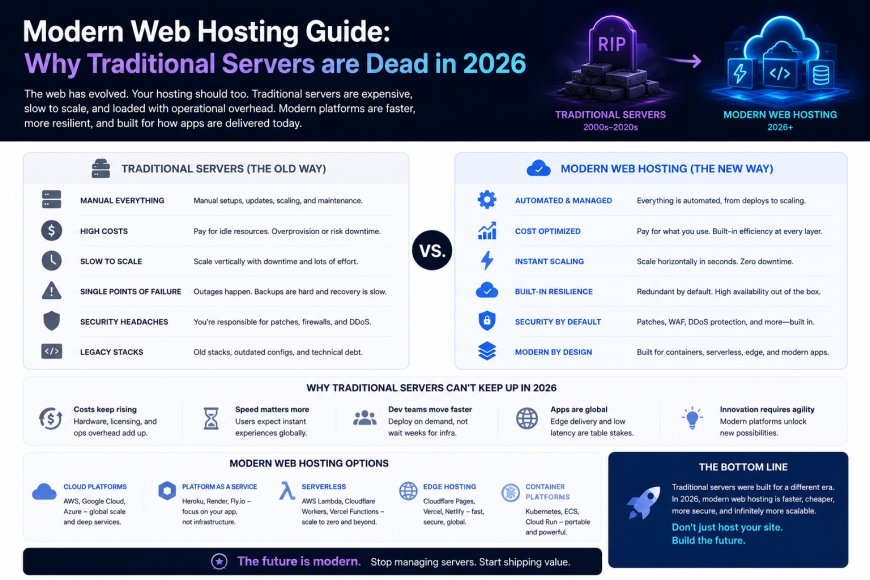
| Evaluation Metric | Traditional VPS Hosting | Edge Serverless Hosting |
| Server Location | Single, fixed geographical region | Globally distributed (200+ cities simultaneously) |
| Scaling Mechanism | Manual upgrades or complex auto-scaling groups | 100% Automated and instantaneous |
| Maintenance Overhead | High (OS updates, firewalls, server patches) | Zero (Abstracted away by the cloud provider) |
| Billing Model | Fixed monthly cost (Regardless of actual usage) | Pay-as-you-go (Billed strictly per request/compute time) |
| Time to First Byte (TTFB) | High for international users | Low uniformly worldwide (<50ms) |
How to Choose Your Modern Hosting Stack
When mapping out your deployment strategy, look at your underlying application architecture to determine the optimal hosting environment:
-
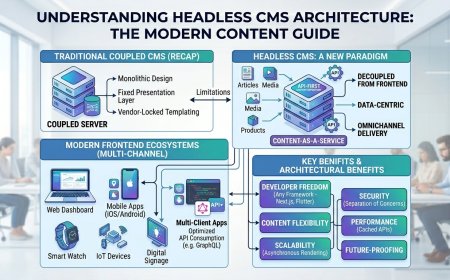
The Static-First Framework: If your site is built using a modern framework that supports static site generation (SSG) or incremental regeneration (like Astro or Next.js), deploy entirely to an Edge CDN (e.g., Cloudflare Pages). It is practically free, completely un-hackable from a server perspective, and offers unmatched global speeds.
-
The Headless Database Setup: If your application requires a dynamic database backend, pair your edge frontend with a Serverless Database (e.g., Neon Postgres, Supabase, or PlanetScale). This ensures that both your code execution and your database queries run close to the user, eliminating traditional database network lag.
Conclusion: Stop Managing Servers, Start Shipping Features
The ultimate goal of modern hosting is simple: abstraction. As a developer or business owner, you shouldn't spend your weekends patching Linux security vulnerabilities or monitoring server RAM utilization logs. By migrating your web architecture to the edge, you transfer the entire infrastructure burden to global networks, allowing you to focus on what actually drives value—writing clean features and crafting exceptional user experiences.
What does your hosting stack look like? Are you still relying on classic virtual private servers, or have you migrated your production environments to serverless edge platforms? Let us know your workflow in the comments below!