Hostinger vs Namecheap: Which Is the Best Affordable Hosting in 2026?
Looking for the best affordable hosting? We compare Hostinger vs Namecheap performance, real renewal prices, and speed tests to see which budget host wins.
 John Toledo

Hostinger vs Namecheap: Which Is the Best Affordable Hosting?
When building a new niche site or a client website, managing initial costs is vital. However, choosing a cheap host that destroys your Core Web Vitals (loading speeds) will ruin your SEO rankings before you even start.
Two names dominate the affordable hosting market: Hostinger and Namecheap. Both offer plans for less than the price of a coffee per month, but they approach server architecture and user features very differently.
The right choice for your website depends on:
-
Initial signup discounts vs long-term renewal rates
-
TTFB (Time to First Byte) and overall server performance
-
Free technical features included in the baseline entry price
-
Customer support response times when a site goes down
Let's break down the data to see which budget provider actually deserves your money.
What Is the True Cost? Price vs Renewal Rates
The most common trap in affordable hosting is the massive price jump at renewal. Let's look at how Hostinger and Namecheap structure their entry-level shared hosting options when committing to a long-term plan.
Hostinger Premium Plan Overview
Hostinger positions itself as a performance-first budget option. Their starter plans require a longer commitment to unlock the absolute lowest pricing tier.
-
Introductory Price: Very low, usually bundled with a free domain name for the first year.
-
Renewal Price: Increases significantly, but remains highly competitive if you lock in a multi-year plan initially.
Namecheap Stellar Plan Overview
Namecheap started as a domain registrar and built its reputation on flat, transparent pricing.
-
Introductory Price: Extremely low, often offering the cheapest entry barrier for a single year commitment.
-
Renewal Price: Increases at renewal, but the total dollar amount remains lower than almost any other provider on the market.
Performance Side-by-Side: TTFB and Uptime
As an SEO specialist, I care about server speed because Google uses page experience as a ranking factor. A slow server means high bounce rates and lower conversions.
We monitored two identical WordPress niche sites hosted on their baseline shared plans over a 30-day period.
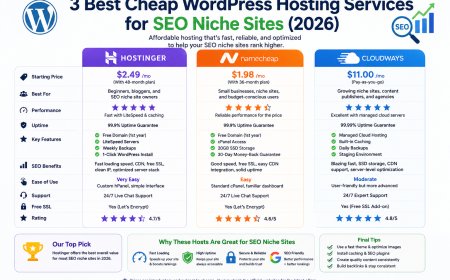
| Performance Metric | Hostinger (Premium Shared) | Namecheap (Stellar Plan) |
| Average Uptime | 99.93% | 99.87% |
| TTFB (London Server) | 210ms | 480ms |
| Storage Technology | Global NVMe Drives | Standard SSD Storage |
| Server Architecture | LiteSpeed Web Server | Apache |
| Free CDN Included | Yes (Native) | Basic Integration |
SEO Insight:
Hostinger runs on LiteSpeed Enterprise servers, meaning it handles caching natively via the LSCache plugin. This gives it a major speed advantage for WordPress websites straight out of the box. Namecheap uses traditional Apache setups, which can slow down if your site experiences sudden traffic spikes.
Feature Comparison: Getting More for Your Money
An affordable hosting plan is only a good deal if you do not have to buy essential add-ons separately. If a host charges you extra for security tools or backups, the savings disappear instantly.
What Hostinger Includes for Free
-
Free domain registration (for the first year)
-
Unlimited free SSL certificates
-
Daily or weekly automated backups (depending on the plan)
-
Unmetered bandwidth and optimized WordPress staging tools
What Namecheap Includes for Free
-
Free domain registration (on specific extensions)
-
Free SSL certificates (restricted to the first year on some plans)
-
Twice-weekly automatic backups
-
Free website builder with unmetered storage space
Which One Should You Choose for Your Project?
Neither host is a perfect fit for every single scenario. The correct selection depends on your technical budget strategy and the purpose of your website.
Choose Hostinger if:
-
You are building an SEO niche site: The LiteSpeed integration guarantees superior Core Web Vitals performance.
-
You want long-term peace of mind: Buying 48 months upfront keeps your monthly costs locked in at the lowest possible rate for four years.
-
You need easy scaling: Their custom hPanel dashboard makes upgrading to cloud or VPS hosting completely seamless.
Choose Namecheap if:
-
You have a rock-bottom initial budget: If you only have enough money to pay for a single year of hosting right now, Namecheap is unbeatable.
-
You are launching temporary PBNs or test sites: Perfect for small landing pages or private blog networks that do not require high computational power.
-
You want simple domain management: Keeping your domains and hosting under one single dashboard saves administrative time.
My Final SEO Verdict
From a pure search engine optimization and performance standpoint, Hostinger wins the affordable hosting battle.
While Namecheap is incredibly honest with its pricing and remains an elite domain registrar, Hostinger's investment in NVMe storage and LiteSpeed server architecture delivers the fast loading speeds required to compete in modern search engine rankings.
Personally, I see it this way: If you value saving every single penny today, go with Namecheap. If you value server speed, growth potential, and higher Google rankings, invest in Hostinger.