The Modern Productivity Stack: Engineering High-Performance Workspaces
Analyze the evolving productivity tools ecosystem. Learn how asynchronous communication platforms, modular databases, and automation frameworks eliminate cognitive friction.
 John
John
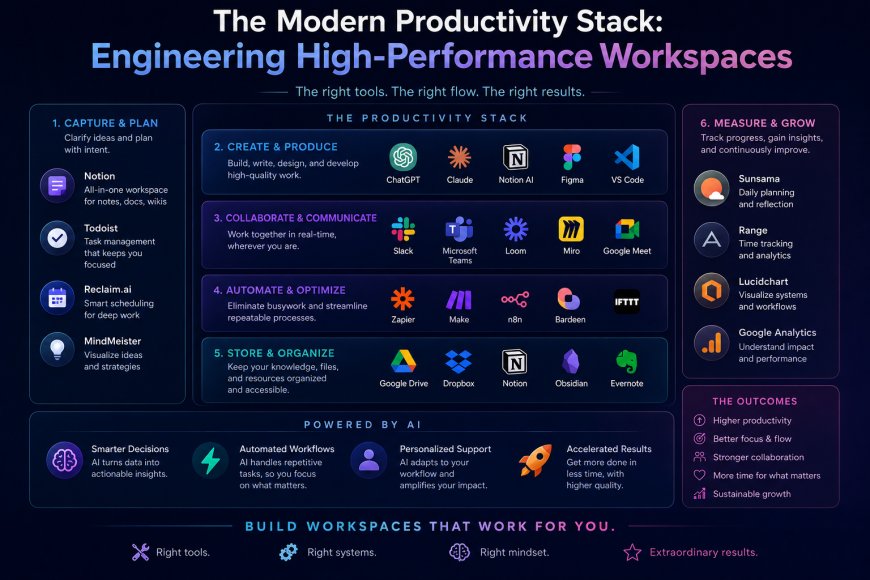
The Modern Productivity Stack: Engineering High-Performance Workspaces
The digital workspace architecture has moved past traditional, fragmented office suites. In a highly distributed operational landscape, productivity is no longer measured by hours spent inside a dashboard, but by the velocity of documentation, the elimination of manual context switching, and the clarity of asynchronous data structures.
Deploying an inefficient productivity stack creates organizational debt. When team communication, task assignment, and documentation sit in isolated software silos, teams waste critical cognitive energy managing information rather than executing objectives. Building an optimal stack requires selecting deep, interoperable systems that function as a single organizational engine.
The Core Workspace Infrastructure Mapping
To maximize operational throughput, enterprise frameworks must organize their software layers into distinct functional tiers.
| Functional Tier | Market Leaders | Primary Operational Purpose |
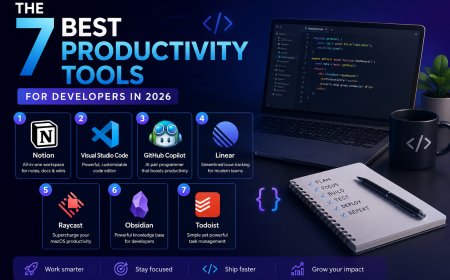
| Modular Databases & Wikis | Notion, Obsidian, ClickUp Docs | Consolidating institutional knowledge, system operating procedures (SOPs), and unified project documentation. |
| Asynchronous Task Architecture | Linear, Todoist, Monday.com | Managing sprint workflows, tracking developer ticket deployment, and identifying pipeline bottlenecks. |
| Real-Time & Async Communication | Slack, Loom, Microsoft Teams | Reducing synchronous meeting overhead through quick video briefings and structured chat channels. |
| Automation & Integration Layers | Zapier, Make, n8n | Creating zero-code or low-code programmatic pipelines to sync data across distinct software endpoints. |
| Visual Mapping & Brainstorming | Miro, FigJam | Designing systems topology, outlining application logic maps, and structuring conceptual flows. |
Three Architectural Principles of Modern Productivity
1. Embracing Asynchronous-First Communication
High-performance organizations minimize real-time meetings because they disrupt deep focus blocks. Utilizing asynchronous tools like Loom allows engineers and product managers to record detailed walkthroughs of code deployment or design feedback. Recipients process the information at their convenience, preserving deep technical focus while building a permanent, reusable video knowledge library.
2. Transitioning to Structured Modular Databases
Traditional, fragmented text files are being replaced by relational database systems like Notion or ClickUp. Inside a modular ecosystem, a single document is not just a page; it is a data object equipped with explicit attributes, assignees, deadlines, and parent-child dependencies. This allows identical data to be displayed simultaneously as a high-level timeline for executives, a Kanban board for developers, or a simple text layout for content creators.
3. Programmatic Middleware Automation
The definitive bottleneck in daily operations is the manual replication of data between apps. Modern productivity stacks deploy middleware solutions like Make or n8n to automate administrative overhead. For example, when a developer moves a task to "Ready for Review" inside Linear, an automated script instantly notifies the QA channel on Slack, updates the project status inside Notion, and logs a timestamped record inside an operational spreadsheet without human intervention.
Strategic Implementation Verdict
When building an enterprise productivity ecosystem, avoid the temptation to adopt every specialized tool on the market. A toolset with too many applications increases cognitive friction and introduces data fragmentation.
Prioritize open platforms that feature robust API connectivity, universal markdown export capabilities, and unified search functions across your entire software ecosystem. The goal of a modern productivity stack is not to give you more platforms to monitor, but to build an unshakeable digital workspace where information flows seamlessly.