Managed vs. Standard Hosting: What Is the Real Difference?
What is the difference between managed and standard hosting? Discover which web hosting type fits your budget, technical skills, and business goals.
 John
John
What Is the Difference Between Managed Hosting and Hosting?
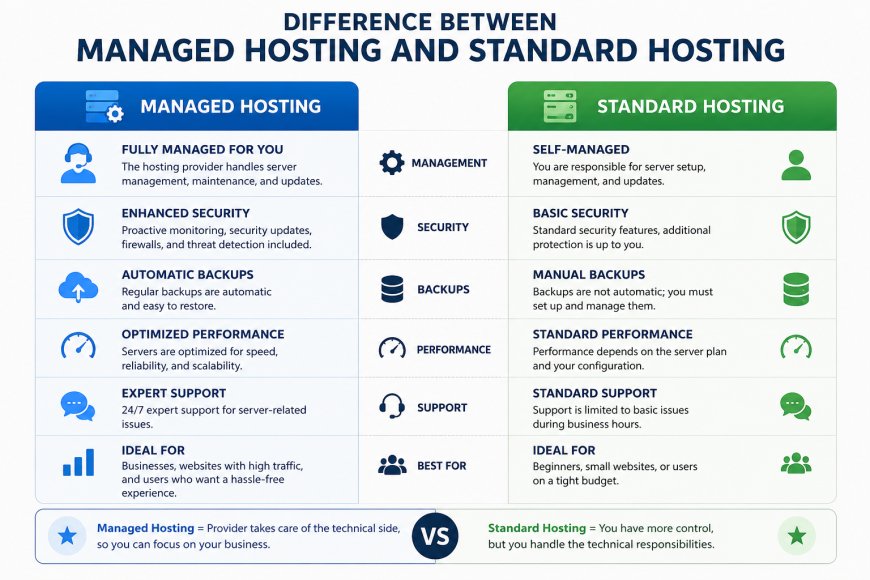
When I first compared managed hosting with standard hosting, I realised the two terms are often used as though they mean the same thing. In reality, hosting is the broad service that stores a website online, while managed hosting is a premium version where the provider handles the technical work for me.
If I choose standard or self-managed hosting, I am responsible for updates, security, backups, and troubleshooting. With managed hosting, the hosting company takes care of those tasks instead.
The key differences come down to:
-
Who manages the server
-
How much technical skill is needed
-
The level of support and security included
-
Whether you want convenience or complete control
Ultimately, the right choice depends on your budget, website goals, and how involved you want to be in managing your hosting environment.
What Is Standard Hosting and How Does It Work?
Standard hosting (often called self-managed hosting) is a type of web hosting where you rent server space, but you are responsible for managing everything yourself. The hosting provider supplies the infrastructure, while I handle the technical setup and ongoing maintenance.
When someone visits your website, their browser connects to the server, which delivers your site’s files, images, and code, just like any other hosting type. The difference is that I am in charge of keeping everything running smoothly.
With standard hosting, your responsibilities typically include:
-
Installing and updating software
-
Managing security and backups
-
Fixing errors and troubleshooting issues
-
Optimising performance
User Experience:
"I chose standard hosting to save money, but I quickly realised it required more technical work than I expected."
Standard hosting is best suited for developers or users who want full control over their server environment.
What Is Managed Hosting and What Does It Include?
Managed hosting is a hosting service where the provider takes responsibility for the technical side of running the server. Instead of spending time maintaining the website infrastructure myself, you can focus on creating content, serving customers, or growing the business.
In a managed hosting plan, the provider usually handles:
-
Server setup and configuration
-
Operating system updates
-
Security patches and malware monitoring
-
Automatic backups
-
Performance optimisation
-
24/7 technical support
-
Uptime monitoring
Managed hosting is particularly popular with small businesses, ecommerce websites, and beginners because it removes much of the technical pressure. A managed hosting provider often acts like an outsourced IT department. If something goes wrong, there is normally a support team available to fix it.
User Experience:
"I don't want to spend my evenings updating servers or fixing security problems. I just want my website to work."
That is exactly why managed hosting exists.
What Is the Difference Between Managed Hosting and Self-Managed Hosting?
The main difference between managed hosting and self-managed hosting is who is responsible for the server. With managed hosting, the provider takes care of maintenance, security, and updates. With self-managed hosting, I must do everything myself or hire someone to do it.
Key Responsibilities of the Hosting Provider (Managed)
In a managed hosting plan, the provider normally deals with the following:
-
Installing and configuring the server
-
Updating the operating system
-
Monitoring server performance
-
Applying security patches
-
Running backups
-
Troubleshooting technical issues
-
Providing technical support
Tasks You Would Need to Manage Yourself (Self-Managed)
If you choose self-managed hosting, you are responsible for:
-
Installing software and updates
-
Configuring security settings
-
Setting up backups
-
Monitoring uptime and performance
-
Fixing server problems
-
Protecting the website from cyber threats
The differences become much clearer when compared side by side.
| Feature | Managed Hosting | Self-managed Hosting |
| Server setup | Done by provider | Done by me |
| Security updates | Automatic | Manual |
| Backups | Included | You need to arrange |
| Technical support | 24/7 support | Limited or none |
| Customisation | Moderate | Full control |
| Technical skill needed | Low | High |
Managed hosting offers convenience and support, while self-managed hosting offers more freedom and lower monthly costs.
Why Is Managed Hosting More Expensive Than Standard Hosting?
Managed hosting usually costs more because you are paying for more than simple server space. In addition to the hosting itself, you are also paying for expert support, security, monitoring, backups and regular maintenance.
A self-managed hosting plan may appear cheaper at first, but the lower monthly price often does not include the extra tools and expertise required to keep the website running smoothly. For example, with self-managed hosting I may need to pay separately for:
-
Backup software
-
Security and malware protection tools
-
Emergency technical support
-
A freelance developer or IT specialist
-
Monitoring and performance optimisation services
A managed hosting provider includes these within the package, which can make the higher price more reasonable in the long term. If you are comparing different providers, it can also help to see how support and pricing vary between companies.
| Hosting Type | Typical Monthly Cost | What Is Included |
| Self-managed shared hosting | £3–£10 | Basic server space only |
| Managed shared hosting | £10–£25 | Updates, support, backups |
| Self-managed VPS hosting | £15–£40 | Server only |
| Managed VPS hosting | £30–£100+ | Security, monitoring, support |
In the long term, managed hosting can often save money because it reduces downtime and removes the need to hire technical staff. However, if budget is your biggest concern and you are comfortable handling the technical side yourself, self-managed hosting can still be a practical option.
Which Is Better for Security, Performance, and Reliability?
For most websites, managed hosting is usually the stronger option when it comes to security, performance, and reliability. Because the provider actively monitors the server, problems are often fixed before they affect the website.
Security Features Included with Managed Hosting
Managed hosting plans commonly include:
-
Firewalls
-
Malware scanning
-
DDoS protection
-
Automatic software updates
-
SSL certificate support
-
Daily backups
These features help protect websites from cyber attacks and data loss. This is especially important for ecommerce websites or businesses that collect customer information.
Real-World Case:
A small online shop switched from self-managed VPS hosting to managed hosting after repeated security problems. The owner explained: "I was spending hours every month trying to fix plugin updates and security warnings. After moving to managed hosting, everything was handled automatically." Within weeks, the website experienced faster load times, fewer technical issues, and no further downtime.
Performance and Uptime Advantages
Managed hosting providers usually optimise the server for speed and reliability. They may include content delivery networks (CDNs), advanced caching, and regular monitoring.
This means websites often load faster and stay online more consistently. Most managed hosting companies also provide uptime guarantees of 99.9% or higher. For a business website, reliability matters. A slow or unavailable website can mean lost customers and lost revenue.
Who Should Choose Managed Hosting and Who Should Choose Standard Hosting?
Managed hosting is the better choice for anyone who wants simplicity, support and less technical responsibility. It is particularly useful for beginners, small businesses and website owners who would rather focus on running their website than maintaining a server.
Managed hosting is often best for:
-
Beginners with little technical knowledge
-
Small businesses without an in-house IT team
-
Ecommerce websites that need stronger security
-
Agencies managing several websites
-
Bloggers and business owners who want more convenience
Self-managed hosting, on the other hand, is more suitable for users who want complete control over their hosting environment. This is usually the better option for developers or experienced users who are comfortable managing updates, security and troubleshooting themselves.
Self-managed hosting is often best for:
-
Developers and advanced users
-
Businesses with technical staff
-
Users who need highly customised server settings
-
Anyone trying to keep hosting costs as low as possible
Neither option is automatically better. The right choice depends on whether you value convenience and support more than control and flexibility.
Which Types of Hosting Can Be Managed or Self-Managed?
Managed and self-managed are not separate hosting types, they are service levels that can apply to different hosting solutions. Most hosting types allow me to choose whether I want full control or provider support.
Shared hosting is usually partially managed, as the provider handles basic setup and maintenance. VPS and dedicated hosting often give a clear choice between managed and self-managed plans. Cloud hosting is also flexible, with managed cloud options becoming popular for their scalability and support. WordPress hosting is another common example, where managed plans handle updates, backups, and security automatically.
In simple terms:
-
Shared hosting -> Usually partially managed
-
VPS & dedicated -> Managed or self-managed options
-
Cloud hosting -> Flexible (managed or self-managed)
-
WordPress hosting -> Often fully managed
This flexibility means you can choose both the hosting type and how much control you want.
How Can You Decide Which Hosting Option Is Right for Your Website?
The easiest way to decide is to ask yourself a few practical questions:
-
Do you have the technical knowledge to manage a server?
-
Do you have the time to handle updates, monitor security, and fix issues when they arise?
-
And how critical is your website—would downtime impact your business?
If your answer to most of these is no, then managed hosting is usually the better choice. It offers peace of mind, better security, and ongoing support, allowing you to focus on your website rather than technical tasks. If you do have technical skills and prefer full control, then standard hosting (self-managed) may suit you better.
In simple terms:
-
Managed hosting -> less responsibility, more support
-
Standard hosting -> more control, more responsibility
Ultimately, it all comes down to how much responsibility you are willing to take on.
My Final Verdict
If you are asking for my recommendation, I would suggest choosing managed hosting if you want a simple, reliable, and stress-free experience. In my opinion, it is the best option for most beginners, business owners, and anyone who does not want to deal with the technical side of running a server.
That said, if you have the skills and genuinely want full control, standard hosting (self-managed) can be a great choice, especially if you are looking to save money.
Personally, I see it this way: if you value time and peace of mind, go managed. If you value control and flexibility, go self-managed.