Cybersecurity in Web Hosting: The Essential Guide to Protecting Your Digital Infrastructure
Is your hosting provider doing enough to protect your business? Learn the critical pillars of web hosting cybersecurity and how to safeguard your site against evolving threats.
 John Toledo
Cybersecurity in Web Hosting: The First Line of Defense for Your Digital Presence
In the current digital landscape, maintaining a secure web presence is no longer optional—it is a business imperative. While many organizations prioritize design, performance, and SEO, the underlying web hosting cybersecurity remains the most critical, yet often overlooked, component of a successful digital strategy.
Your web server is the foundation of your digital infrastructure. If this foundation is compromised, the integrity of your entire brand, customer data, and operational continuity is at risk.
Understanding Hosting Cybersecurity: Why It Is Critical
Hosting cybersecurity encompasses the array of protocols, tools, and configurations applied to a server to mitigate unauthorized access, malicious injections, and sophisticated cyberattacks.
The risks of neglecting hosting security include:
-
Data Breach & Compliance Violations: Compromised sensitive customer information can lead to severe legal and financial repercussions.
-
Brand Reputation Erosion: Search engines will flag your site as "Not Secure," instantly destroying visitor trust.
-
SEO Penalties: Websites identified as malicious are promptly blacklisted by search engines, causing a total loss of organic traffic.
-
Operational Downtime: Cyberattacks can force your site offline, resulting in direct revenue loss and operational disruption.
Essential Security Measures for Robust Web Hosting
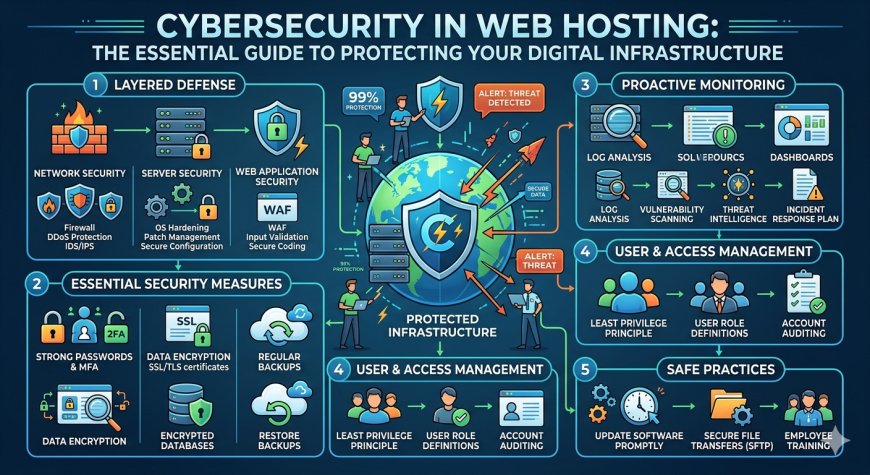
To ensure your digital assets are resilient against threats, your hosting infrastructure must integrate the following enterprise-grade security standards:
-
SSL/TLS Encryption: Mandatory for securing data transit between the server and the client, ensuring information remains private.
-
Web Application Firewall (WAF): A proactive layer that filters out malicious traffic and protects against common vulnerabilities like SQL injection and Cross-Site Scripting (XSS).
-
Automated Off-site Backups: A robust disaster recovery plan is non-negotiable. Regular, automated backups ensure minimal downtime in the event of an incident.
-
Regular Patch Management: Ensuring the server stack (PHP, MySQL, Apache/Nginx) is running on the latest versions is vital to closing known security gaps.
-
Proactive Malware Scanning: Constant monitoring allows for the early detection and quarantine of malicious scripts.
-
Account Isolation: In shared hosting environments, account isolation is crucial to prevent "cross-contamination" if another user on the same server is compromised.
Conclusion: Viewing Security as a Strategic Investment
Compromising on security to reduce hosting costs is a high-risk strategy that rarely pays off. Cybersecurity is a shared responsibility between your hosting provider and your technical team. By prioritizing a secure hosting architecture, you are not just protecting data—you are building a resilient, trustworthy foundation that allows your business to scale with confidence in an increasingly complex digital world.
Is your website infrastructure truly secure? Conduct a thorough security audit today and ensure your hosting partner prioritizes security as much as they do speed and uptime.