Why Cheap Hosting is Your Biggest Security Liability
Are you choosing hosting based on price alone? Discover why low-cost hosting often hides significant security risks that can cost your business more in the long run.
 John Toledo
Why Cheap Hosting Is Your Biggest Security Liability
In the pursuit of optimizing operational expenses, many businesses fall into the trap of selecting the "cheapest" hosting plan available. While a low monthly bill may look attractive on a spreadsheet, the hidden costs associated with inadequate web hosting security can be devastating.
In the digital world, you get what you pay for. When it comes to hosting, those "low prices" are often a direct result of cut corners in server-side security.
The Hidden Price Tag of Budget Hosting
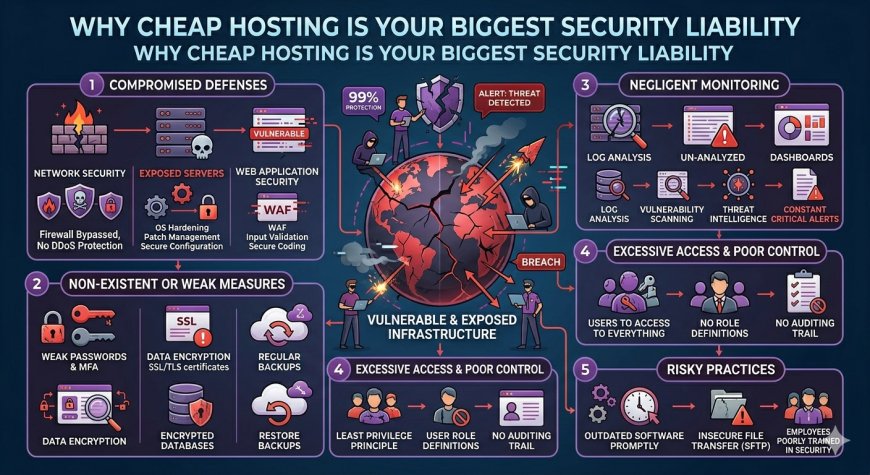
Opting for bargain-bin hosting often means sacrificing the essential layers of defense required to keep your business running. Here is what you are actually risking when you choose price over protection:
-
Shared Vulnerabilities: Cheap hosting often lacks proper account isolation. If a neighboring site on your server gets compromised, the attacker can often move laterally into yours.
-
Outdated Server Stacks: Maintaining modern, secure server software is expensive. Budget providers often run outdated versions of PHP or databases to save on management costs, leaving your site exposed to "low-hanging fruit" vulnerabilities.
-
Zero Proactive Monitoring: Security is not a "set it and forget it" task. Premium hosting includes 24/7 server monitoring and real-time threat detection; cheap hosting usually leaves you to discover breaches on your own.
-
The "Recovery" Premium: When a breach occurs, the cost of forensic analysis, malware removal, and reputation management will far outweigh the few dollars you saved on your monthly hosting fee.
How to Assess Your Hosting Security Strategy
Instead of looking for the lowest price, perform a "Security Audit" of your current or potential provider by asking these three questions:
-
"Does your infrastructure include managed WAF and DDoS mitigation as part of the base package?" If they charge extra for basic filtration, they are prioritizing profit over your security.
-
"Are server-side backups automated and stored on redundant, isolated systems?" If you are responsible for your own backups, your risk of permanent data loss is significantly higher.
-
"What is your average response time for critical security patches?" A professional host should be able to tell you how they manage CVE (Common Vulnerabilities and Exposures) updates.
The Verdict: Security is a Business Asset
Reliable hosting is not an expense—it is a cornerstone of your business continuity plan. A secure server reduces your insurance risk, protects your customer data, and ensures your site is always available for your users.
Before you renew that budget-friendly contract, consider the true cost of an incident. It is time to treat your hosting provider as a strategic partner in your cybersecurity defense, not just a line item on your budget.